3D Printing Tech to develop aluminum castings
When Using a 3D Printer Actually Makes Sense
In the age of rapid prototyping, it’s easy to assume 3D printing is always the fastest and most efficient way to develop parts. But in reality, it’s just one tool in a much larger toolbox—especially when you need durable, production-ready components or multiple identical parts with minimal tooling cost.
This article walks through a real project that required multiple unique parts, fast turnaround, and repeatable results—all without spending a fortune on traditional tooling.
Why Tooling Still Matters
 The primary purpose of tooling is to reduce time, cost, and effort. While Karl Marx once quipped that “tools are for fools,” the opposite is true in manufacturing: tools exist because they make high-quality, high-volume production possible at a reasonable price.
Yes, 3D printing can get the job done. But at scale, it often becomes a print farm—expensive, slow in aggregate, and limited to specific materials. That’s why companies still invest heavily in machining farms and volume-based workflows.
3D printers are invaluable for certain tasks, but they also face two major limitations:
-
Material limitations: The best production materials often aren’t printable.
-
Size constraints: Printers excel at small parts but struggle with large or deeply contoured shapes.
Think of those YouTube builds where someone tries to re-create an entire Porsche body using thousands of printed tiles. It’s impressive—but it perfectly illustrates the challenges of pushing 3D printing beyond its strengths.
Tooling Offers a Different Advantage
Tooling is designed to create functional parts in a single shot. Instead of stitching together dozens—or thousands—of printed components, tooling produces ready-to-use parts quickly and consistently.
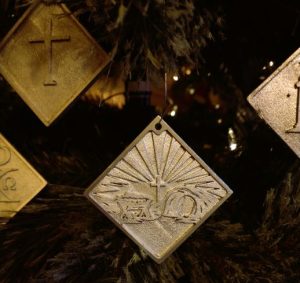
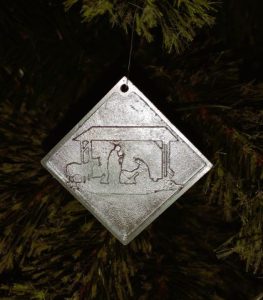
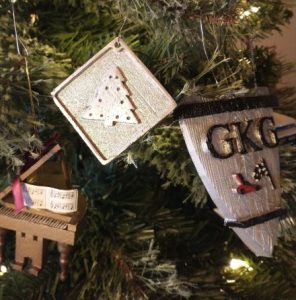
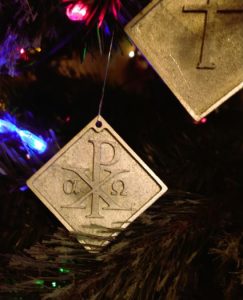
This brings us to the project at hand: cast aluminum Christmas ornaments.
Case Study: Cast Aluminum Christmas Ornaments
The challenge was simple in description but complex in execution:
-
Produce multiple ornament designs
-
Achieve high detail, both simple and intricate
-
Keep tooling costs low
-
Manufacture fast, with repeatable results
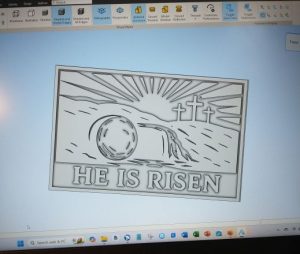
Iterative Art Work
Developing the artwork was one challenge—turning those shapes into cast-aluminum forms was another.
There are several ways to create high-quality aluminum castings:
-
Lost wax
-
Lost PLA
-
Plaster casting
-
Fine sand casting
-
Die casting
And no, this isn’t another die-cast article. Instead, we used a hybrid approach.
The Real Solution: Modular Tooling + SLA Printing
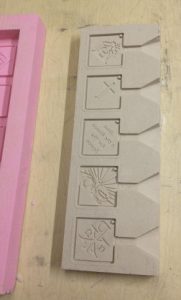
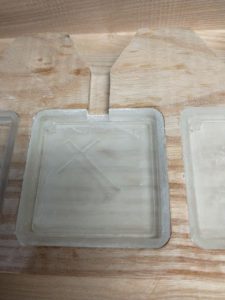
Modular tooling uses a mass-produced mold base paired with interchangeable printed cavities. This allows multiple shapes to be cast using the same outer mold structure.
Why SLA?
SLA printing excels at:
-
Fine details
-
Sharp edges
-
Intricate geometry
-
Fast turnaround
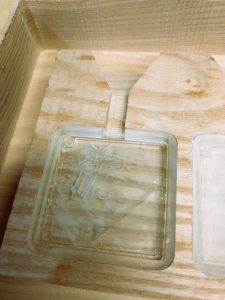
In many cases, SLA can produce features that CNC machining can’t—at least not affordably.
For this project:
-
Each ornament cavity was SLA printed
-
The cavities were installed in gang molds (3 or 5 cavities per mold)
-
A total of 8 ornament designs were produced on a tight schedule
Tooling Base Construction
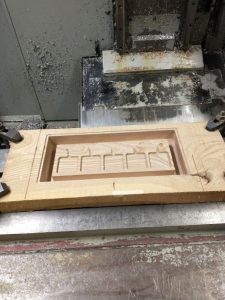 The modular mold bases were created via CNC:
-
Wood was used when high detail was required
-
Foam was used for simpler shapes or when low-viscosity rubber molds were planned
The entire mold assembly was placed inside a pressure tank during cure to eliminate air bubbles and ensure crisp detail.
This process allowed rapid iteration—critical when dialing in each ornament’s final appearance.
Overcoming the Main Design Challenge
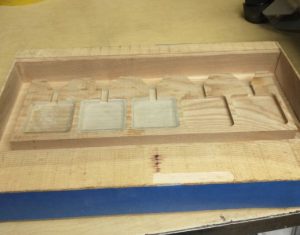 Our biggest hurdle was determining the proper cavity depth and geometry. Some features cast beautifully; others required:
-
Vacuum assist, or
-
Reduced cavity depth to improve fill and visual clarity
Multiple depth trials were run until each ornament produced a clean, sharp, attractive aluminum casting.
Where 3D Printing Really Helps
At Prototype Industries, 3D printing isn’t just for prototypes—it’s a critical tool used in unexpected ways:
-
Clamp fixturing
-
Mold cavities
-
Sand-mold impressions
-
Drill fixtures
-
CNC pattern fixturing
-
And yes—we also produce functional, highly complex parts
3D printing shines when it’s used strategically, not universally.
Final Thoughts
3D printing is a powerful technology, but it’s not the answer to everything. When combined intelligently with modular tooling, CNC routing, and conventional casting methods, it becomes part of a versatile manufacturing strategy—one that delivers speed, detail, low cost, and production-ready results.
If you’d like to explore how we can support your project, feel free to reach out. We have many satisfied customers who can speak to the quality of our work and the results we deliver.
| Contact Us |